Choosing A Path With Disability When Your Brain Won’t Help You
Choosing A Path With Disability When Your Brain Won’t Help You Read More »
You don’t have to inspire anyone.
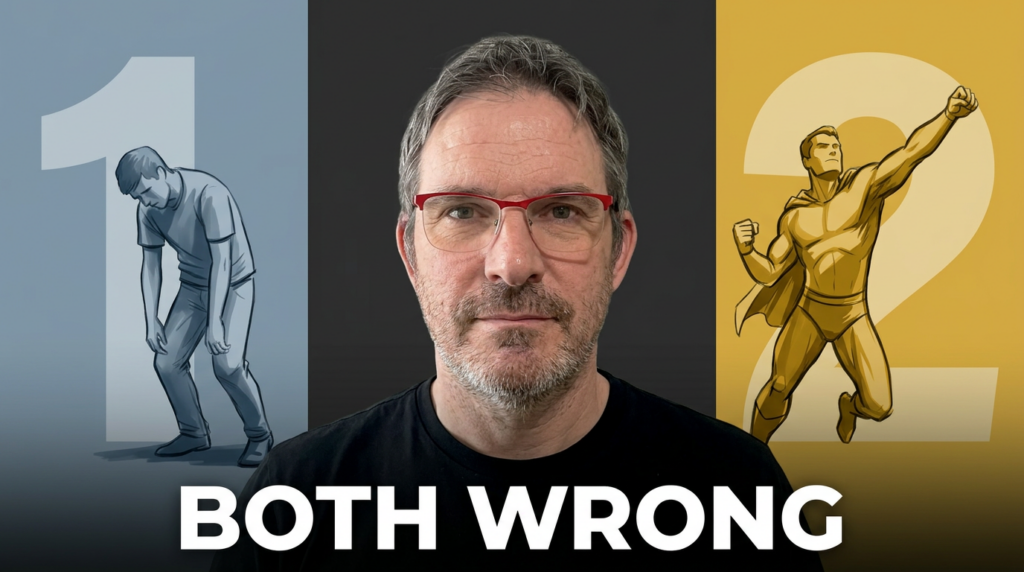
Society has built exactly two slots for people with disability: the pitiful charity case, and the superhero overcomer who triumphs against all odds. Both archetypes exist to make non-disabled people feel warm and fuzzy – and both place an exhausting, invisible burden on you to perform for an audience that goes back to their lives unchanged.
The pressure to “fight” your disability – the warrior narrative – sets you up to fail a war against your own body. Your body is the only permanent teammate you will ever have. Fighting it leads to burnout, shame, and guilt every time you hit a normal human limitation.
There is a better way. It starts with three shifts: from overcoming to adapting, from inspiring to informing, and from warrior to strategist. These aren’t grand transformations – they’re practical mental moves that put your energy back where it belongs. On your life, not on anyone else’s expectations.
You can quit the inspiration job. Here’s what to do instead.

Don’t Inspire Others With Your Disability (Do This Instead) Read More »
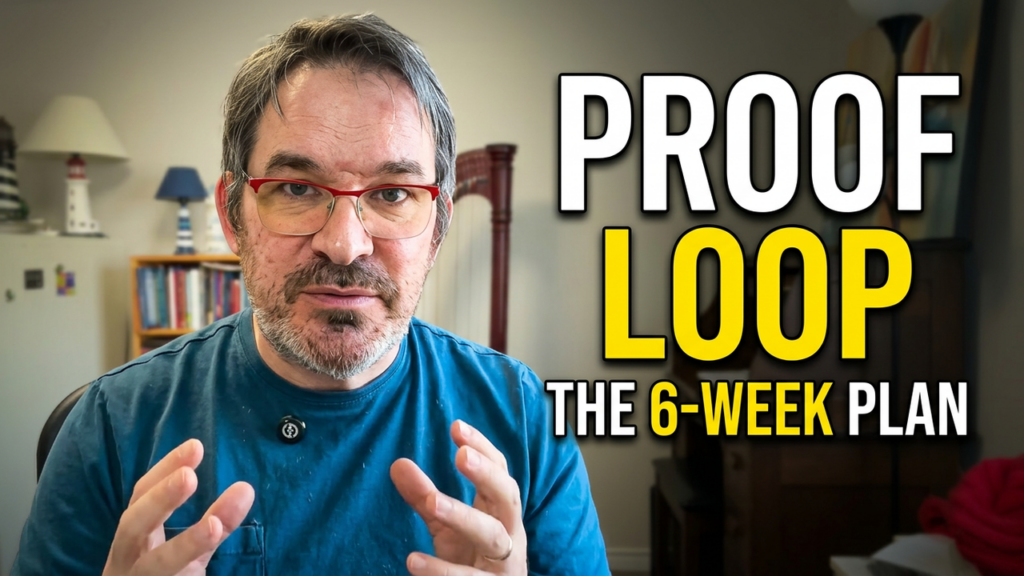
The Proof Loop is a three-step framework for rebuilding psychological momentum after disability or chronic illness. When the brain enters survival mode following a major life change, it systematically erases evidence of daily wins while amplifying failures – a pattern that blocks creative energy even after physical stability is achieved. By noticing micro-wins above the daily baseline, labeling them as proof of capability, and storing them in an external log, individuals can override this deficit filter. Neuropsychologist Dr. Rick Hanson’s research indicates that six weeks of consistent practice produces measurable neurological change, reducing stress response activity while increasing engagement in the brain regions governing planning and decision-making.
The Proof Loop : How to Build Momentum When You’re Starting Over Read More »
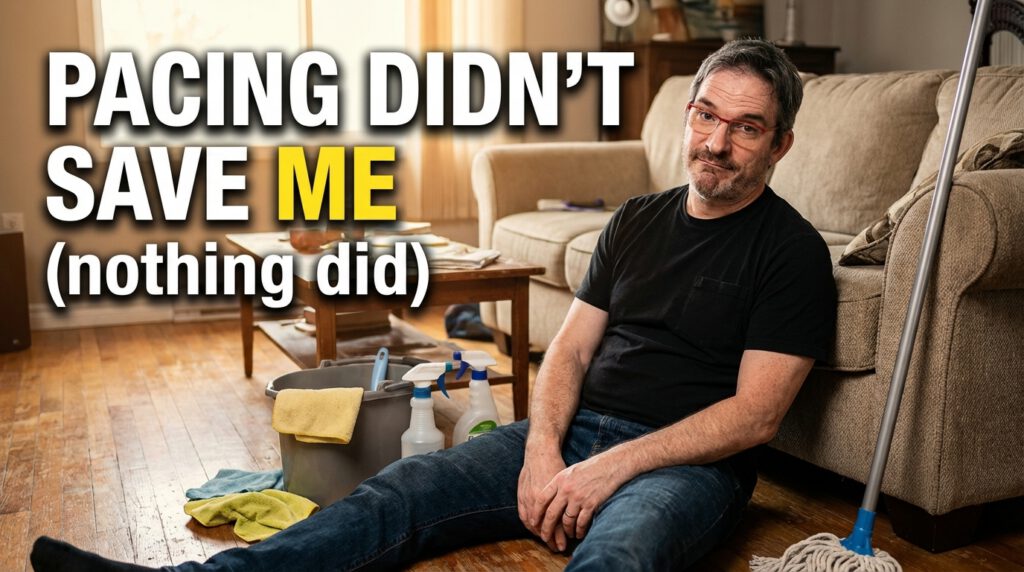
The advice to “pace yourself” sounds reasonable until you realize it was designed for a body that fully recharges overnight. If yours doesn’t, you’ve been handed a system that guarantees failure – not because you’re doing it wrong, but because the math never added up. There is a different approach. It starts by defining the smallest action that still counts as showing up, before a bad day arrives to derail the plan.
Why “Pacing” Is Failing You (And What To Do Instead) Read More »
Resisting mobility aids is not a sign of strength – it is a symptom of internalized stigma. Walkers, canes, wheelchairs, and grab bars are functional tools that enhance safety and preserve energy, not symbols of decline or defeat. Choosing the right tool for the job is a sign of intelligence, not weakness
Why “Giving In” To A Walker Is Actually A Win Read More »
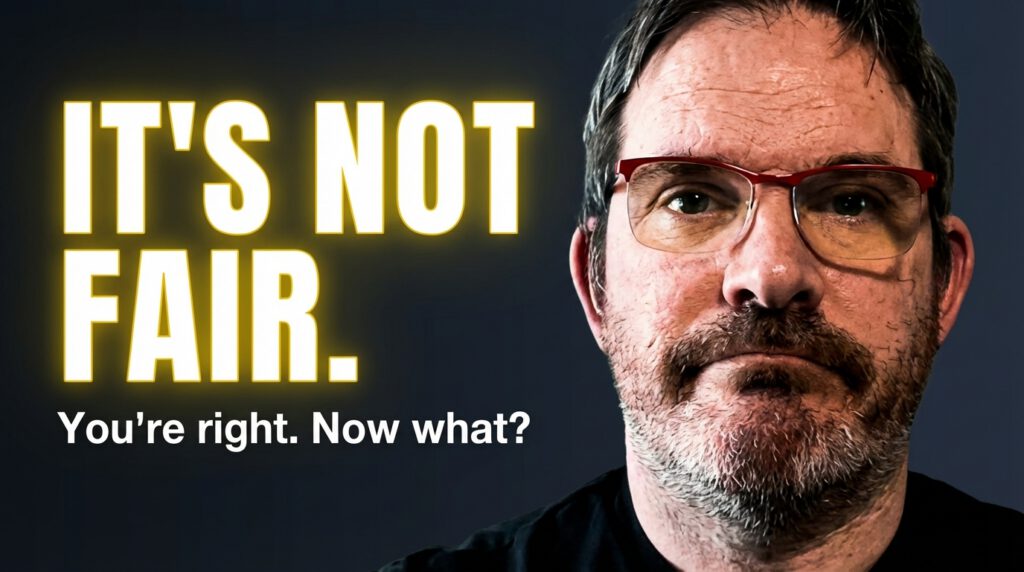
“It’s not fair” – and you’re right. You shouldn’t have to be disabled. That feeling is completely valid, and this post won’t try to talk you out of it. But when “it’s not fair” becomes the only story you carry, it quietly starts making decisions for you. Here’s a three-part framework for taking back the wheel – not by pretending the unfairness doesn’t exist, but by refusing to let it be the boss of you.
It’s Not Fair I’m Disabled : Why You Deserve To Give Yourself A New Kind of Fair Read More »
Feeling stuck can be a frustrating experience, especially when living with chronic illness or disability. This post explores the crucial shift from outcome-based thinking to identity-based thinking—a change that empowers you to embrace your new self and rebuild a fulfilling life. Discover how recognizing grief as part of your journey, rewriting your internal narrative, and taking small steps toward micro-momentum can transform your perspective and help you reclaim agency in your life.
Why You Should Stop Comparing Your Day To Theirs Read More »
One day, you realize something you used to do without thinking is just… gone. And before you’ve even figured out what to do about it practically, the wave hits: “What does this say about me?” Grief over disability losses – big or small – is not weakness. It’s human. And it’s also the only real path through. Here’s what happens when you stop sweeping it under the rug.
Why You’re Allowed to Grieve Your Old Self Read More »